Stroke · Emotions & Behaviour - TisaleRehab
How to Cope With Behaviour Changes After a Stroke?
A stroke changes more than the body. It changes how a person reacts, speaks and feels. If you're a caregiver and you notice your loved one "isn't quite themselves", you're not alone. Let's look at the 5 most common behaviour changes after a stroke and what genuinely helps. Step by step, without judgment.
Why behaviour changes after a stroke
Many behaviour changes after a stroke come from how the stroke affects emotion. A stroke is a traumatic event. For the body, but also for the mind. It can trigger depression, anxiety and other mood swings. For many people, these emotions settle over time. Especially once they start, even partly, accepting their new life. This adjustment phase is exactly when the patterns below tend to appear.
If you've had a stroke, or you're caring for someone who has, this article is for you. You'll find concrete guidance for a difficult time.
1. Mood swings after a stroke
There's a whole spectrum of moods that can shape behaviour after a stroke. From momentary irritation, through apathy, to euphoria out of proportion with the situation. This isn't "just moods". It's the result of damage to the brain areas that regulate emotion.
Remember
Mood swings after a stroke aren't a sign of weak character or bad will. They're a neurological consequence of brain injury. Recognising that makes day-to-day care much easier.
2. Inappropriate or irrational behaviour
Some caregivers worry when a person recovering from stroke acts inappropriately or irrationally. These changes are a side effect of the stroke. The part of the brain responsible for reasoning may have been damaged. It usually fades on its own over time. Other times, psychological therapy is needed to get proper support.
When inappropriate or irrational behaviour intensifies, it can signal what's known as post-stroke dementia, formally called vascular dementia. It impairs reasoning, planning, judgment and memory. When dementia develops after a stroke, it shapes behaviour directly. For example, poor short-term memory can look like "zoning out" mid-conversation or repeating the same questions.
It's important to know: not every cognitive change after a stroke signals dementia. Very often it's simply a brain that's still tired and still healing.
What helps
Cognitive training, meditation, a consultation with a doctor about treatment, and a well-balanced diet for stroke recovery.
3. "Odd" behaviour when the brain is overloaded
Sometimes behaviour appears that, from the outside, just looks odd. The reason is simple: stroke recovery consumes an enormous amount of mental resources. "Normal" daily tasks now take far more time, because the brain has to process them from scratch and plan the right response.
An ordinary day can be exhausting for someone recovering from a stroke. Exhaustion is one of the more common causes of behaviour that seems unusual. What's needed here, above all, is empathy. What feels normal and automatic to you as a caregiver can be a genuinely demanding task for a brain that's healing. Consistent work rebuilding physical ability also supports the brain's neuroplasticity, its capacity to reorganise itself after injury.
What helps
Cognitive training, proper rest, meditation and talk therapy.
4. Forgetting and neglect
A stroke often affects memory and attention. This can show up as forgetting or neglecting certain topics, objects, or even parts of one's surroundings. Forgetting is usually the result of cognitive changes after a stroke, and it can improve over time with practice.
Neglect, on the other hand, can signal a visual field deficit after a stroke, known as unilateral neglect syndrome. A person may simply not notice things on the side of the body affected by weakness. This isn't a choice to ignore something. It's a real neurological deficit.
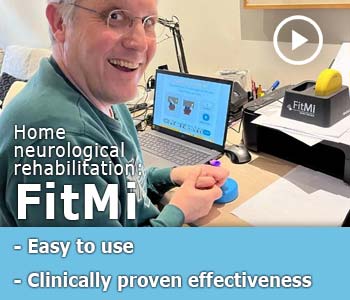
FitMi
A home neurorehabilitation system for the whole body. Two wireless controllers track every movement.
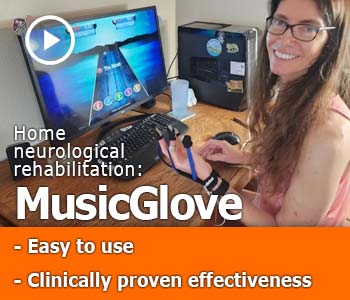
MusicGlove
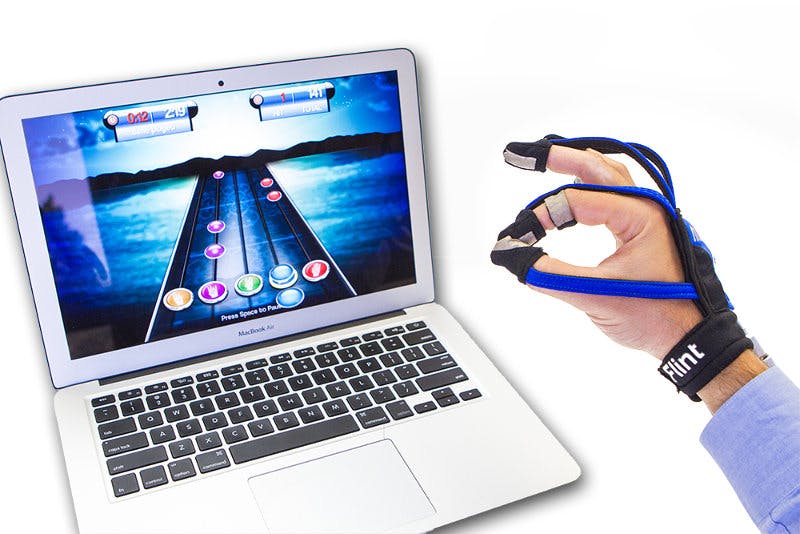
A glove that pairs precise grip exercises with music. High repetition per session.
5. Anger, depression and anxiety after a stroke
Negative emotions, anger, depression, anxiety, are unfortunately common after a stroke. They usually appear when someone is trying to find their footing in their new life. Put yourself in that position for a moment: relearning tasks you once did without a second thought. That can be enormously frustrating.
It's worth practising patience with people who've had a stroke. And remembering that these emotions have a cause. They're not a whim.
What helps
Positive psychology, work on concentration, meditation, and, where needed, medication discussed with a doctor.
"The FitMi home rehab kit let me keep working on my recovery without interruption. The app runs on a touchscreen tablet, so it's easy for me to start a session and pick trunk, leg, arm or hand. I'd recommend it to anyone who needs effective rehab at home."
- Tomasz N., patient
Can behaviour changes after a stroke be positive too?
Not every behaviour change after a stroke is a downside. Sometimes a stroke shapes a person in a good way. A life perspective can shift, and a brain area that once generated extreme anxiety can quiet down in a positive sense.
Every stroke is different. Every person will respond in their own individual way. Some show changes that could be called favourable, others less so. Fortunately, there are ways to support the brain as it continues to heal, and to help rebuild emotional balance after a stroke.
What you can do today, as a caregiver
- Don't take it personally. Remember it's a result of brain injury, not a personal attack.
- Build a daily routine. Consistent mealtimes, rest and exercise reduce brain overload.
- Talk to a doctor or neuropsychologist if behaviour changes intensify or get in the way of daily life.
- Don't forget yourself. Caregivers who burn out support their loved ones less well.
- Regular physical rehab also supports cognitive and emotional function.
When to seek urgent medical help
If behaviour changes are sudden and severe, accompanied by confusion, aggression that threatens safety, or suspicion of another vascular event, don't wait. Contact a doctor straight away.
Glossary
- Vascular dementia
- A set of cognitive impairments caused by damage to the brain's blood vessels. Affects memory, reasoning and judgment.
- Unilateral neglect syndrome
- A disorder where a stroke survivor fails to notice or ignores objects, sounds, or part of their own body on the side affected by the brain injury.
- Neuroplasticity
- The brain's ability to form new neural connections and reorganise function. Central to stroke rehabilitation.
- Cognitive training
- A set of exercises engaging memory, attention and thinking. Used to support the return of cognitive function after a stroke.
- Occupational therapy
- A form of therapy focused on restoring independence in daily tasks: eating, hygiene, dressing.
Frequently asked questions
Are behaviour changes after a stroke permanent?
Not always. For many people, behaviour changes ease as rehabilitation progresses and they adapt to their new situation. For some, part of the change lasts longer and needs therapeutic or medical support.
How do I tell short-term irritation apart from vascular dementia?
Short-term mood swings usually pass and don't get worse over time. Vascular dementia shows up as a growing, lasting decline in memory, reasoning and planning. If in doubt, talk to a neurologist.
Does physical rehab affect behaviour and emotions too?
Yes. Regular physical activity supports the brain's neuroplasticity, improves mood, and can ease frustration and apathy, because it gives a real sense of progress and control.
What can a caregiver do when they feel helpless about a loved one's behaviour changes?
It helps to seek support from a psychologist, join a group for stroke caregivers, and use consultations with the rehab team. Feeling helpless as a caregiver is natural. You don't have to handle it alone.
Summary
Key takeaways
Behaviour changes after a stroke, mood swings, irrational reactions, odd behaviour, forgetting, or negative emotions, have a neurological basis. They're not the fault of the person showing them. Empathy, routine, cognitive training and, where needed, professional psychological help genuinely help. And remember: not every change after a stroke is negative. Sometimes a new, healthier outlook on life emerges.
Sources
- TisaleRehab - https://tisalerehab.com - educational site run by stroke survivors.
- National Institute of Neurological Disorders and Stroke (NINDS) - cognitive and emotional changes after stroke, ninds.nih.gov
- American Stroke Association - vascular dementia and unilateral neglect syndrome, stroke.org
This will make it easier for more than 100 articles and guides on neurological rehabilitation, created specifically for patients and their families, to appear in Google. Our publications will also appear more frequently in Google Search, AI Overviews, and Google Discover.
Get inspired by a stroke survival story


It's a very good "gaming" therapy.
I had a stroke 9 years ago and have tried many different therapies. I really like the gaming aspect offered by MusicGlove. I have only been using this kit for a month and I can already see some progress. It helps me a lot to stay motivated. It's really amazing...
In summary, I really like MusicGlove. MusicGlove.
Tomasz S. (04.03.2020)