
Neurological Guide & Rehab Insights - TisaleRehab
Can I Go Back to Work After a Stroke?
Yes. Most people can return to work after a stroke. There's no single timeline for everyone. A medical assessment decides. So does the type of job, physical function, memory, concentration and speech. Post-stroke fatigue matters too. The return is often gradual: shorter hours, changed duties, remote work. This article covers real numbers, the basics of worker protections, and concrete signs of readiness.
The short answer: it depends
Many people return to work after a stroke. Many return in a changed form. Some switch careers. Some don't return at all. All of these are normal outcomes. None of them is a failure.
A stroke isn't one condition. It's hundreds of different situations. It depends on which part of the brain was affected. Someone with leg weakness who did heavy physical work faces a different path than someone with mild speech issues who works at a desk. There's no single answer. There's a set of questions worth asking yourself, and that's what this article walks through.
Info
Returning to work isn't all-or-nothing. You can go back part-time. You can change roles. You can work remotely a few days a week. Every one of these counts.
How many people actually return to work?
The numbers in research vary widely. Some studies show about a third of patients returning to work. Others show as many as two thirds. That spread doesn't mean the studies are wrong. It means the outcome depends on many factors at once. Age matters. Stroke severity matters. The country where the study was done matters. So does how long patients were followed after the event.
One thing stays consistent across the research. The first 6 to 12 months after a stroke is when most people make the call, either to return or to step back. The longer someone waits without a concrete plan, the harder it gets to return later.
"Patients often ask me when they'll be 'healthy enough' to go back to work. I always give the same answer: that's not a question about health in general. It's a question about specific tasks in a specific job. Someone can be ready for desk work and not yet ready for a construction site. That's not a contradiction."
- Dr. Joanna Nowak
What shapes the return to work?
A handful of factors come up again and again in research and in conversations with therapists.
1. Type of job
Desk and knowledge work statistically returns easier than physical labour. Especially with limb weakness.
2. Cognitive function
Memory, concentration and thinking speed often matter more than physical function alone.
3. Post-stroke fatigue
Invisible from the outside. It can block a full workday even with good physical recovery.
4. Employer support
Flexible hours and a willingness to talk change the outcome more than most people expect.
5. Speech and communication
Aphasia affects roles built around conversations, presentations and client contact especially hard. If speech is central to your job, it's worth looking at communication aids for aphasia.
6. Age and tenure
A longer history with one employer often means more willingness to adjust conditions.
Cognitive changes can be the sneakiest factor here. They're not visible at a glance. They can make daily work harder than a weak arm ever does.
Physical work vs. office work
The type of job changes almost everything. It changes the pace of return. It changes which functions you need to rebuild first.
| Criterion | Physical work | Office work |
|---|---|---|
| Key function | Strength, coordination, physical stamina | Concentration, memory, thinking speed |
| Typical return time | Usually longer, tied to weakness severity | Often shorter, if speech and cognition are intact |
| Safety risk | Higher: machinery, height, lifting | Lower, but rises with driving duties |
| Room to adapt | Limited | High: change of duties, remote work |
| Effect of fatigue | Very noticeable on long shifts | Manageable with breaks |
Tip
If your job mixes physical and office duties, consider a temporary shift in the balance. More desk tasks. Fewer field tasks. Until you regain full function.
Green lights and red flags
Before you return, it's worth an honest check on where you stand. Below are two lists. Signs you're ready. And signs it's better to wait.
Good signs
- A full day without crashing. You can handle 6 to 8 hours of activity without needing a long nap.
- Stable focus. You can stay on a task for 30 to 45 minutes without losing the thread.
- Reliable communication. People understand you without constant repeating.
- A doctor confirms readiness. A clear "yes" from a neurologist or occupational health doctor, not just your own sense of it.
Red flags
- Heavy fatigue after short activity. An hour wears you out like a full workday.
- Frequently losing your place. Returning to a paused task after a call or a conversation is hard.
- Safety concerns. Unsteady balance. Weaker hand control around tools or machinery.
- A flat or low mood. Post-stroke depression can lower motivation more than any physical deficit.
If you notice a low mood in yourself, don't brush it off. It's common after a stroke, and often overlooked. If your job involves driving, talk to your doctor about it before you get behind the wheel again.
Worker protections after a stroke
Paperwork can be almost as stressful as rehab itself. Here's what to keep in mind, wherever you are.
- Employment protection rules during sick leave differ by country. Check yours with your national labour authority or your HR department.
- Sick pay and rehabilitation benefit schemes vary widely, both in length and in amount.
- A registered disability status, where it exists, often opens up extra workplace rights.
- Some countries guarantee shorter working hours or extra breaks for a recognised disability.
- Before returning, it's worth a check-in with an occupational health doctor. They're often the ones who formally sign off on your return.
Important
Exact timelines and benefit amounts change and vary by country and by case. Always confirm the current rules with your national social security office or a disability rights advisor before making a decision.
How to go back to work - 6 steps
Talk to your doctor about real readiness
Ask for a specific assessment. Not a general "probably fine". Ask which functions are still missing.
Write down your real limitations
No shame in it. Fatigue after 4 hours, trouble multitasking. That's information, not something to hide.
Contact your employer early, not at the last minute
Give them time to prepare your role or adjust the schedule. A surprise helps no one.
Propose a phased return
Part-time for the first month. Remote work two days a week. Shorter shifts to start.
Set a warning signal with yourself
Fatigue returning after two hours, three days in a row? That's a sign to slow down. Not to push through.
Keep rehab running alongside work
Going back to work isn't the end of therapy. Short, daily exercise at home keeps progress going. Even once your days fill up.
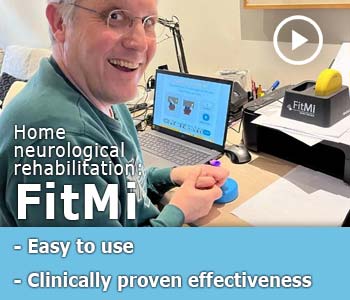
FitMi
A short evening session. Rehab doesn't have to suffer once work fills your day.
MusicGlove
20 minutes of hand exercise set to music. Easy to fit into a tight schedule.

A patient's story
Case
Joanna, 47, accountant
- Stroke
- Ischaemic. Mild weakness in the right hand. Trouble concentrating.
- 3 months
- Sick leave. Intensive hand and working-memory rehab.
- Return
- Part-time. Remote work 3 days a week. Shorter tasks at first.
- One year on
- Full-time. Small notes as a memory aid, a workaround, not a setback.
"The hardest part wasn't the numbers. It was holding my attention through a whole day. Once my manager agreed to remote work three days a week, I stopped being afraid I couldn't manage."
- Joanna, patient
Frequently asked questions
Can I lose my job because of a stroke?
A stroke alone is not grounds for dismissal in most places. Sick leave usually carries employment protection. What matters after you return is whether you can do the job, sometimes with a modified role.
Does my employer have to adjust my role after a stroke?
In many countries, a registered disability triggers specific employer duties. Without one, it depends more on goodwill, though many employers find it worthwhile to keep an experienced staff member.
How long does sick leave after a stroke usually last?
It's very individual. Confirm the exact rules and timelines with your national social security or benefits office, since they vary by country and by case.
Can I work from home after a stroke?
Yes, and for many people it's the best starting point. Remote work removes the commute and lets you take breaks exactly when you need them.
What if I feel ready but my doctor says not yet?
Ask directly what's still missing before clearance. A subjective feeling of readiness doesn't always match real stamina, especially with post-stroke fatigue, which is often invisible from the outside.
Is it worth applying for a disability status if I plan to return to work?
Often yes. A disability status doesn't mean giving up work. It can add legal protections and open the door to funding, and it's compatible with full-time employment if your health allows it.
Sources
- TisaleRehab - https://tisalerehab.com - educational site run by stroke survivors.
- Cochrane Database of Systematic Reviews - reviews of return-to-work outcomes after stroke, cochranelibrary.com
- World Health Organization - disability and work guidance, who.int
- National stroke associations and employment law bodies vary by country - check your local social security or labour authority for exact rules.