Neurological Guide & Rehab Insights - TisaleRehab
12 Questions to Ask Your Doctor After a Stroke
You leave the appointment and only remember everything you meant to ask once you're back in the car. It happens to almost everyone. After a stroke, it's easy to nod along without fully following what was just said - and the questions only surface once it's too late to ask them. Here are 12 concrete questions worth writing down before your next visit, from recurrence risk to medication to when you can actually get back behind the wheel.
12 questions to ask your doctor after a stroke
You don't have to guess what belongs on this list. A good care team should walk you through most of this anyway - but knowing these questions in advance means you leave every appointment with a real answer instead of a vague "try not to worry about it."
What type of stroke did I have, and which part of my brain was affected?
It sounds basic, but everything else depends on it. Was it an ischemic stroke (a clot) or a haemorrhagic stroke (a bleed)? That's one variable. The second is which brain region was affected, since that determines which functions are at risk and which specialists you'll need. A stroke affecting the area that controls the arm calls for different rehab work than one affecting speech or swallowing. Ask your doctor to explain this in plain terms, and don't hesitate to ask what "ischemic" or "haemorrhagic" actually means if no one has spelled it out yet.
What's my risk of having another stroke?
Recurrence risk is real, and it's highest in the first year after a stroke. That number isn't meant to scare you - it explains why the next few questions on this list, about blood pressure, cholesterol and medication, aren't extras. They're your personal risk-reduction plan. Ask your doctor to estimate this risk for you specifically, since it depends heavily on stroke type and any other conditions you have.
What symptoms mean I need to call for help immediately?
Since recurrence risk is highest in the early months, you should know the warning signs well enough that there's no hesitation - not just to recognise them, but to know they mean act now, not "let's wait and see." Ask for a refresher on the classic signs (drooping on one side of the face, arm weakness, slurred speech) and ask what might look different in your specific case, since a second stroke doesn't always present the same way as the first.
Why am I taking these medications, and what do I do if I miss a dose?
Blood thinners, blood pressure medication and statins each do something different to lower your recurrence risk, and understanding why you're taking a specific one makes you far more likely to actually take it consistently. A common mistake: treating a missed dose as trivial, or stopping a medication once you feel better, without realising the medication is why you feel better. Ask plainly what each drug does, what symptoms would mean it isn't working, and what to do about a missed dose. If side effects are tempting you to quietly stop - say so out loud. There's almost always an alternative worth discussing.
Do I have any signs of swallowing problems?
Swallowing difficulty, known as dysphagia, affects a substantial share of stroke survivors and meaningfully raises the risk of aspiration pneumonia, when food or liquid enters the airway instead of the oesophagus. It can be subtle - coughing during meals, a wet-sounding voice after eating, a sense that something's "stuck." It's worth flagging even if you feel like you're managing fine. Ask whether you've been assessed for swallowing safety, and if there are any warning signs at all, ask for a referral to a speech and language therapist.
When can I start rehab, and what kind?
There's no single fixed start date - the right moment depends on stroke severity and how you're doing day to day. What matters more than the exact date is that therapy targets what you actually want to regain: gait training rebuilds walking, hand exercises rebuild hand function. General physical activity doesn't substitute for either. This is where neuroplasticity comes in - the brain's capacity to rewire itself, which responds to repeated, purposeful practice of a specific movement, not activity in general. Ask which type of therapy (physiotherapy, occupational therapy, speech therapy, or a combination) fits your goals, and what a realistic weekly exercise plan should look like once you're home.
Should I be screened for post-stroke depression?
Post-stroke depression affects a considerable share of survivors and is easy to miss, because low motivation or a flat mood often gets written off as a "normal" reaction to being ill rather than a treatable condition. Left untreated, it also slows physical recovery, since motivation and engagement in therapy are closely linked. Ask for a mood screening even if you feel fine, and ask again at future visits, since symptoms can appear weeks or months after the stroke, not necessarily right away. If sadness, loss of interest, or changes in sleep or appetite show up, say so directly rather than waiting to be asked.
When will it be safe to drive again?
Many guidelines suggest waiting at least a few weeks after a mild stroke before driving - but the real answer depends on vision, reaction time and processing speed, not just the calendar. Driving before you're cleared isn't just a legal risk, it's a genuine safety risk for you and everyone else on the road. Ask your doctor directly whether you're cleared to drive, and if not, what specifically needs to improve, and whether a driving rehabilitation assessment would make sense. Rules vary by country and region, so it's worth checking with your local licensing authority too. Most stroke survivors do eventually return to independent driving, so treat this as a "when," not an "if."
What are my new blood pressure and cholesterol targets?
Secondary prevention guidelines after an ischemic stroke set fairly strict targets for most patients - often lower than the general population norms, which surprises a lot of people. Ask your doctor for your specific numbers and compare them with what you had before the stroke. Ask what combination of medication, diet and activity is meant to get you there - a Mediterranean-style diet and regular, moderate activity are a common starting point, but your plan should be tailored to you, not just "eat healthier."
How will we track my progress and adjust the plan?
Recovery isn't a straight line, and a plan that made sense in week two often needs revising by week twelve, as strength, balance or speech improve. The mark of a good follow-up visit: you leave with one concrete, written next step - not a vague "keep it up." Ask exactly how progress will be measured between visits - that could be a specific walking distance, a task done with less assistance, or a formal assessment tool. Also ask what would trigger a change in therapy intensity or medication. Progress is often small and specific: safer transfers, reaching a little further, needing less help getting dressed. It counts, even when it doesn't look dramatic.
What can I safely practise at home between appointments?
Sessions with a therapist are a small fraction of your week. What you do the rest of the time matters just as much - provided it's the right kind of practice, not just general activity. Home practice is meant to complement your therapy team's plan, not replace it, so this should be a specific conversation, not a leaflet handed to you on the way out. Ask your therapist or doctor for two or three concrete exercises tied to your actual goals: stretches for tight muscles, simple balance work, or a hand exercise that makes it easier to button a shirt or hold a cup. Also ask how you'll know when an exercise has become too easy and needs to progress.
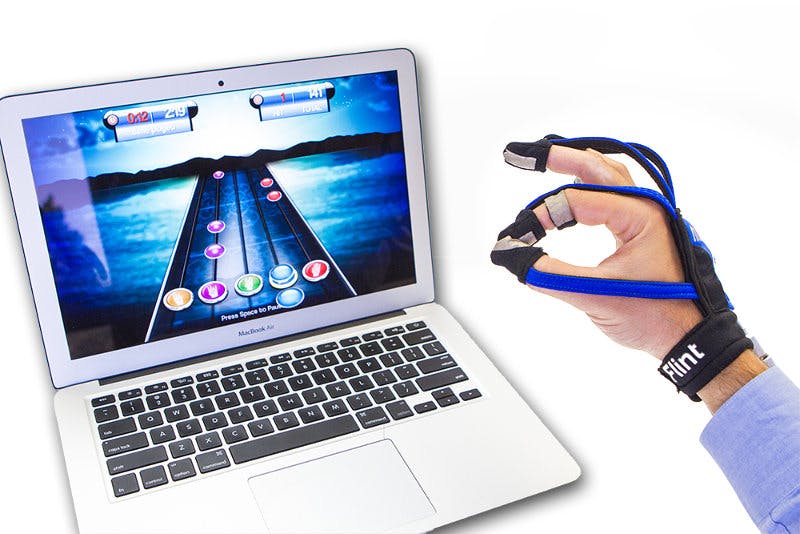
For this kind of daily, repeatable home practice, tools that encourage a high number of repetitions make a real difference - FitMi for whole-body exercise and MusicGlove for focused hand and finger work. For a broader look at how structured repetition drives recovery, see this guide to motor function exercises.
Who else should be on my care team?
Stroke recovery usually needs more than just your treating physician: a neurologist, physiotherapist, occupational therapist, speech and language therapist, and sometimes a psychologist or social worker - depending on what you're dealing with. Gaps show up most often when nobody is coordinating between these specialists. Ask who's currently on your team, who's missing, and who's responsible for keeping everyone aligned on the same plan. If you don't know who to call about a new symptom or question between visits, ask directly. One clear point of contact saves a lot of confusion. The caregiver's role in all this matters just as much - it's worth a conversation of its own.
If you only take one question from this whole list into your appointment, make it the one you've been quietly avoiding. That's usually the one that matters most to ask.
Printable question checklist
Bringing a written list doesn't make you a "difficult patient" - it's how the conversation actually covers what shapes your recovery, rather than only what fits into a fifteen-minute slot.
- What type of stroke did I have, and which part of my brain was affected?
- What's my risk of having another stroke?
- What symptoms mean I need to call for help immediately?
- Why am I taking these medications, and what do I do if I miss a dose?
- Do I have any signs of swallowing problems?
- When can I start rehab, and what kind exactly?
- Should I be screened for depression?
- When will it be safe to drive again?
- What are my new blood pressure and cholesterol targets?
- How will we track progress and adjust the plan?
- What can I safely practise at home between appointments?
- Who else should be on my care team?
What to do between appointments
Stroke recovery doesn't run on a fixed schedule, and there's no single visit where a doctor waves it off as "done." Progress can continue - and often does - for far longer than most people expect.
FitMi
A whole-body home neurorehabilitation system. Two wireless controllers track every movement and adjust difficulty to your current ability.
MusicGlove
A rehabilitation glove that pairs precision grip exercises with music - high repetition per session, with clinically documented improvement within two weeks.
Funding
In the UK, home rehabilitation equipment can sometimes be partly funded through the NHS continuing healthcare pathway, a local authority disability equipment grant, or your private health insurer if you have one - ask your GP, occupational therapist, or insurer directly what applies to your situation, since eligibility rules vary by region and provider.
Frequently asked questions
Can I really ask my doctor all 12 of these questions in one visit?
Probably not, and that's fine. Prioritise questions that match where you are right now: recurrence risk and warning signs matter most right after a stroke, while rehab, driving and daily function come later. Save the rest for your next appointment.
What if my doctor doesn't have time to answer everything?
Ask which items on your list are most urgent right now and which can wait for a follow-up. You can also ask to speak with a care coordinator, or book a separate appointment focused purely on education.
Should a caregiver be in the room for this conversation?
It's a good idea. A caregiver often remembers details a tired patient misses, and can be invaluable for relaying answers at home, especially if speech or memory has been affected.
What if I don't understand my doctor's answer?
Ask for it in plainer language. That's a completely normal request, not a sign you're not keeping up. A good clinician will welcome the follow-up rather than rush past it.
How often should I have follow-up appointments after a stroke?
It depends on the type of stroke, your overall health and your stage of rehab, so confirm the schedule directly with your care team. Visits are usually more frequent in the first few months and space out as your condition stabilises.
Sources
- TisaleRehab - https://tisalerehab.com - educational site run by stroke survivors, distributing the FitMi and MusicGlove home rehabilitation systems.
- American Heart Association / American Stroke Association - secondary stroke prevention guidelines, ahajournals.org
- National Center for Biotechnology Information (PMC) - research on post-stroke dysphagia and depression, pmc.ncbi.nlm.nih.gov
Get inspired by a stroke survival story


It's a very good "gaming" therapy.
I had a stroke 9 years ago and have tried many different therapies. I really like the gaming aspect offered by MusicGlove. I have only been using this kit for a month and I can already see some progress. It helps me a lot to stay motivated. It's really amazing...
In summary, I really like MusicGlove. MusicGlove.
Tomasz S. (04.03.2020)