Examples of motor function exercises to boost recovery
Recovering motor function after stroke or neurological injury demands the right exercises, but choosing among hundreds of options can overwhelm patients, caregivers, and therapists alike. Evidence-based motor exercises targeting strength, coordination, and endurance offer the clearest path to regaining independence and functional capacity. This article presents proven motor function exercises with specific protocols, intensity guidelines, and practical implementation steps to help you or your loved one achieve measurable improvements in daily activities and overall mobility.
Table of Contents
- Key takeaways
- How to choose effective motor function exercises for stroke recovery
- Upper limb motor function exercises: range of motion and repetitive practice
- Gait and balance exercises: intensities and group therapy options
- Shoulder stability exercises and resistance training benefits
- Explore proven rehabilitation kits to support your motor recovery
- FAQ
Key Takeaways
| Point | Details |
|---|---|
| Safety and specificity | Prioritize safety and task specific goals when choosing exercises to protect joints and maximize daily function. |
| Progressive intensity | Use moderate to high intensity with gradual overload starting from your current capacity and increasing reps, speed, or complexity as strength returns. |
| Task specific training | Select exercises that mimic real tasks you want to perform, such as dressing or walking. |
| Practical home friendly | Choose exercises that can be done at home or in therapy with minimal equipment to support adherence. |
How to choose effective motor function exercises for stroke recovery
 Selecting the right motor function exercises requires balancing safety, intensity, specificity, and practical feasibility for your unique recovery situation. Safety comes first: monitor pain levels carefully, avoid overstressing joints, and consult your therapist before advancing to higher difficulty levels. Starting with passive range of motion exercises when no voluntary movement exists, then progressing to active exercises as strength returns, creates a foundation for sustainable improvement.
Exercise intensity directly impacts recovery speed and magnitude. Research shows that moderate to high intensity training produces superior outcomes compared to low-intensity approaches, but the starting point must match your current capacity. Begin conservatively with 10-15 repetitions performed multiple times daily, gradually increasing load, speed, or complexity as tolerance builds. This progressive overload principle applies whether you’re working on arm movements, leg strength, or whole-body coordination.
Specificity matters enormously in motor recovery. Choose exercises targeting the affected limbs and mimicking real-world functional tasks you want to perform. If dressing independently is your goal, practice reaching overhead and across your body. If walking safely is the priority, focus on balance, weight shifting, and gait training. Generic exercises provide less transfer to daily activities than task-specific movements that directly rehearse the motor patterns you need.
Practicality determines adherence. Exercises doable at home or in therapy sessions without expensive equipment increase the likelihood you’ll maintain consistent practice. Simple movements using household items, body weight, or affordable aids keep rehabilitation accessible. The best exercise program is the one you’ll actually complete regularly, so prioritize movements fitting your environment, schedule, and available support.
Pro Tip: Track your repetitions and perceived difficulty in a simple notebook or phone app. Seeing weekly progress motivates continued effort and helps your therapist adjust your program appropriately.
Upper limb motor function exercises: range of motion and repetitive practice
Upper extremity recovery depends heavily on consistent range of motion work and high-dose repetitive practice targeting the shoulder, elbow, wrist, and fingers. Table polishing circles and cradling arm lifts represent foundational exercises stroke patients can perform with caregiver assistance or independently as strength returns. These movements maintain joint mobility, prevent contractures, and prepare the neuromuscular system for more demanding functional tasks.
Table polishing involves placing your affected hand on a smooth surface and moving it in circular patterns, using your unaffected hand for guidance if needed. Perform 10 circles clockwise, then 10 counterclockwise, three times daily. This simple exercise addresses shoulder flexion, internal and external rotation, and elbow extension simultaneously. Cradling arm lifts require you to support your affected forearm with your unaffected hand and lift both arms overhead together, holding for 3 seconds before lowering. Complete 10 repetitions three times daily to maintain shoulder range and prevent frozen shoulder complications.
Repetitive practice volume drives recovery magnitude. Studies demonstrate that adding 20 hours of repetitive upper limb practice significantly improves arm capacity compared to standard therapy alone. This translates to roughly 30 minutes of focused, repetitive arm exercises daily over 8 weeks. The movements should be challenging but achievable, targeting specific motor patterns like reaching, grasping, or manipulating objects.
Progression follows a clear sequence:
- Passive range of motion with caregiver assistance when no voluntary movement exists
- Active-assisted exercises using your unaffected limb or gravity elimination positions
- Active exercises against gravity without external resistance
- Resisted exercises using elastic bands, light weights, or functional objects
Consistency trumps intensity in the early stages. Three short practice sessions daily outperform one long session because motor learning consolidates between practice bouts. Focus on quality repetitions where you consciously control the movement rather than rushing through exercises mindlessly. This deliberate practice strengthens the neural pathways connecting your brain to affected muscles, a process essential for fine motor recovery after stroke.
Incorporate functional objects into your repetitive practice whenever possible. Picking up cups, turning pages, or manipulating coins provides more meaningful motor challenges than abstract exercises. These task-specific movements directly translate to improved performance in daily activities, making your rehabilitation time more efficient and motivating.

Gait and balance exercises: intensities and group therapy options
Walking recovery requires targeted gait training at sufficient intensity to challenge your cardiovascular and neuromuscular systems. High-intensity gait training at 60-80% heart rate reserve substantially improves walking endurance in chronic stroke patients compared to lower intensity approaches. This means working hard enough that you’re breathing heavily but can still speak in short phrases, a level that stimulates both cardiovascular adaptation and motor learning.
Heart rate reserve calculation requires knowing your resting heart rate and maximum heart rate (220 minus your age provides a rough estimate). Multiply the difference by 0.6 for the lower target and 0.8 for the upper target, then add your resting heart rate back. For a 65-year-old with a resting heart rate of 70, this yields a training zone of 121-145 beats per minute. Use a simple fitness tracker or manual pulse check to monitor intensity during walking sessions.
Task-specific group therapy matches individual therapy for improving balance, gait speed, and walking endurance while potentially reducing costs and increasing social support. Group sessions focusing on functional tasks like obstacle navigation, dual-task walking, or community ambulation produce equivalent outcomes to one-on-one treatment. This evidence supports exploring group options if available in your area, particularly for patients who benefit from peer motivation and shared experiences.
| Training Type | Best For | Typical Duration | Key Benefit |
|---|---|---|---|
| High-intensity gait | Walking endurance | 30-40 min, 3x/week | Cardiovascular fitness, distance capacity |
| Task-specific group | Balance, functional walking | 45-60 min, 2-3x/week | Cost-effective, social support, real-world skills |
| Balance exercises | Fall prevention, confidence | 20-30 min daily | Stability, safety, independence |
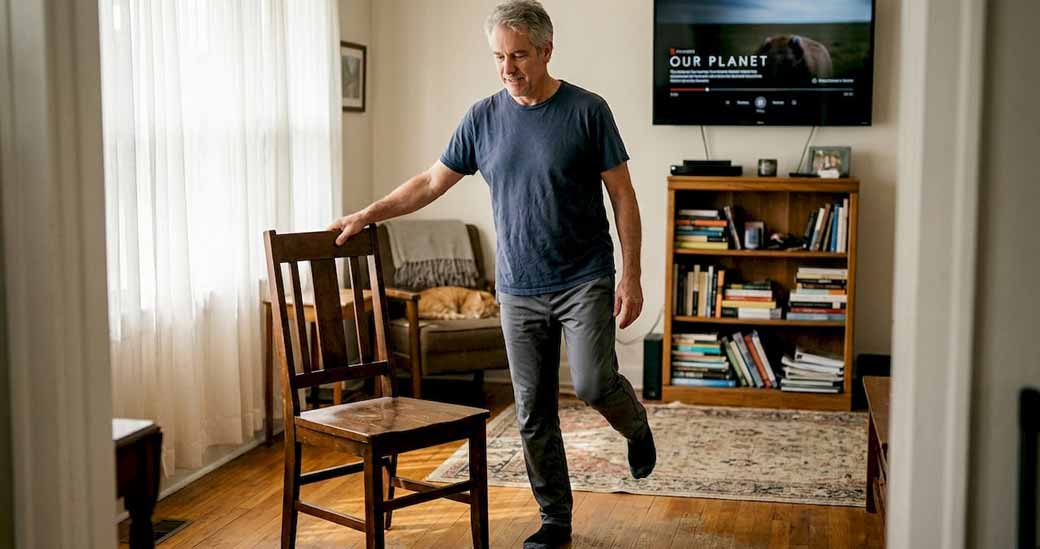
Balance exercises reduce fall risk and improve confidence during standing and walking activities. Single-leg stance (holding for 10-30 seconds on your stronger leg, then attempting the affected side with support), tandem stance (heel-to-toe position), and weight shifting exercises form the foundation. Progress to dynamic balance challenges like stepping over obstacles, turning while walking, or catching and throwing a ball while standing.
Consistency with adequate intensity yields the best gains. Three to five walking sessions weekly, each lasting 20-40 minutes at your target heart rate zone, combined with daily balance work, creates a comprehensive mobility training program. Vary your walking environments to include different surfaces, inclines, and distractions, preparing you for real-world ambulation challenges.
Pro Tip: Practice walking tasks you actually need for independence, like navigating your home layout, walking to the mailbox, or managing curbs and stairs. This functional approach ensures your training time directly improves your daily life rather than just performance in the clinic.
Caregivers play a vital role in supporting functional mobility by providing appropriate assistance, monitoring safety, and encouraging progressive challenge. The right balance between support and independence maximizes recovery while maintaining safety.
 Shoulder stability exercises and resistance training benefits
Shoulder stability forms the foundation for effective hand and arm function, yet it’s often overlooked in stroke rehabilitation programs. A 6-week shoulder stability program significantly enhances functional hand grip in patients with neurological conditions by providing a stable base from which the arm and hand can operate efficiently. Without adequate scapular control and shoulder girdle strength, even recovered hand muscles cannot produce functional force or coordinate precise movements.
Shoulder stability exercises target the rotator cuff muscles, scapular stabilizers, and deltoid. Scapular retractions (squeezing shoulder blades together), wall pushups, and external rotation with resistance bands strengthen these supporting structures. Perform 2-3 sets of 10-15 repetitions, 3-4 times weekly, focusing on controlled movement quality rather than speed or heavy resistance initially.
Resistance training delivers broader benefits beyond shoulder function. Resistance training optimally improves 6-minute walk test performance, a key measure of functional walking endurance, while robot-assisted training shows superior results for short-distance 10-meter walk speed. This suggests combining resistance work for endurance with task-specific gait training for speed creates a comprehensive lower extremity program.
| Intervention | Primary Benefit | Evidence Strength | Practical Application |
|---|---|---|---|
| Shoulder stability exercises | Hand grip strength | Moderate | 6 weeks, 3x/week, focusing on scapular and rotator cuff control |
| Resistance training | 6-minute walk distance | High | Progressive loading, 2-3x/week, targeting major leg muscle groups |
| Robot-assisted gait | 10-meter walk speed | High | Clinical setting, complements home-based resistance work |
Implementing resistance training at home requires minimal equipment. Elastic resistance bands, ankle weights, or even household items like water bottles provide sufficient load for most stroke survivors in early to intermediate recovery stages. Focus on major muscle groups: quadriceps, hamstrings, gluteals, and calf muscles for lower body; biceps, triceps, and shoulder muscles for upper body. Start with resistance allowing 12-15 repetitions with moderate effort, progressing to heavier bands or weights as strength builds.
Combining shoulder stability work with hand and finger exercises creates synergy. As your shoulder control improves, you’ll notice better reach accuracy, reduced compensatory trunk movements, and enhanced ability to position your hand for functional tasks. This integrated approach addresses the kinetic chain from trunk to fingertips, improving overall motor rehabilitation outcomes more effectively than isolated joint training.
Timing matters in resistance training. Allow 48 hours between sessions targeting the same muscle groups to permit recovery and adaptation. Alternate upper and lower body focus days, or perform full-body sessions with lighter loads every other day. Listen to your body: muscle soreness lasting 24-48 hours indicates appropriate challenge, while pain during exercise or soreness persisting beyond 72 hours suggests excessive intensity requiring adjustment.
Explore proven rehabilitation kits to support your motor recovery
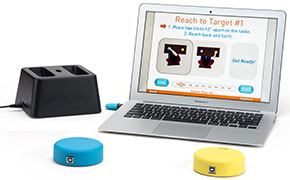
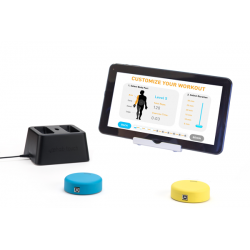
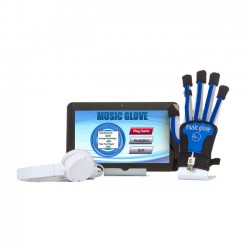
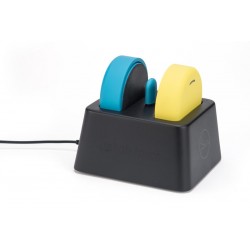
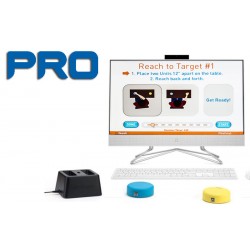
Putting these evidence-based exercises into consistent practice becomes easier with the right tools supporting your efforts. Tisele Rehab’s specialized rehabilitation kits transform the challenge of daily repetitive practice into engaging, measurable sessions that track your progress automatically. Whether you’re working on upper limb recovery, hand function, or whole-body coordination, targeted devices designed specifically for neurological rehabilitation can accelerate your gains.

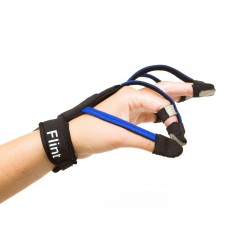
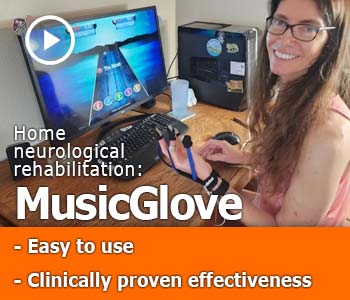
The MusicGlove system exemplifies how technology enhances adherence to high-dose repetitive practice. By gamifying hand and finger exercises through music-based activities, it makes accumulating the 20+ hours of repetitive practice research recommends feel less like therapy and more like an enjoyable activity. Patients using these systems typically achieve higher practice volumes than with traditional exercises alone, directly translating to better functional outcomes. Explore the full range of rehabilitation aids to find solutions matching your specific recovery goals and preferences, and discuss with your therapist how to integrate these tools into your comprehensive program.
FAQ
What are some safe motor exercises for stroke patients?
Safe exercises begin with passive range of motion movements where a caregiver or your unaffected limb moves the affected limb through its available range, progressing to active exercises as voluntary control returns. Start with 10-15 repetitions performed three times daily, carefully monitoring for pain that exceeds mild discomfort. Always consult your physical or occupational therapist before beginning new exercises to ensure movements match your current capacity and medical status.
How often should motor function exercises be done during recovery?
Upper limb range of motion exercises should be performed three times daily with approximately 10 repetitions per movement to maintain joint mobility and prevent contractures. For optimal recovery, accumulate high practice volumes over weeks and months, with research showing 20 or more hours of repetitive task practice produces significant improvements in arm capacity. Distribute practice across multiple short sessions rather than single long sessions for better motor learning and reduced fatigue.
Are group therapy motor exercises as effective as individual therapy?
Clinical evidence demonstrates that task-specific group therapy produces equivalent outcomes to individual therapy for improving balance, gait speed, and walking endurance in stroke patients. Group sessions offer additional benefits including peer support, social interaction, and potentially lower costs while maintaining clinical effectiveness. The key is ensuring group activities remain task-specific and appropriately challenging for each participant’s ability level.
What role does resistance training play in motor recovery?
Resistance training optimally improves walking endurance measured by 6-minute walk test performance, making it a valuable component of comprehensive stroke rehabilitation programs. It strengthens major muscle groups, improves cardiovascular fitness, and enhances functional capacity for daily activities requiring sustained effort. Combine resistance work 2-3 times weekly with task-specific gait and balance training for comprehensive lower extremity recovery addressing both strength and motor control.
Recommended
38
Get inspired by a stroke recovery story

Home rehabilitation at full speed.
My husband suffered a severe stroke on August 19, 2020, which paralyzed him on the right side. Thanks to FitMi he has made huge progress since then. He still has no strength in his right arm, but now he can walk with a cane, his speech has improved significantly, and he is fighting and rehabilitating at full speed. We are very happy that we bought this FitMi kit for him, so he can continue his training and exercises at home. We are encouraged by this program and the positive reviews we read from others who used it. Thank God we found this kit and thank you for your support. It is a wonderful program.
Kate (08.09.2020)