
Neurology & Rehabilitation · Stroke Recovery
10 Stroke Recovery Myths – And What Actually Helps You Heal
After a stroke, you'll hear a lot of advice. Some of it is genuinely helpful. Some of it is confusing. And unfortunately, some of it is simply wrong – and may be quietly holding back your recovery without you even realising it. Let's set the record straight.
Table of Contents
- Myth: Recovery only happens in the first few months
- Myth: If you've hit a plateau, you're done improving
- Myth: Rest is better than activity
- Myth: You can only improve during therapy sessions
- Myth: If a movement is hard, you should avoid it
- Myth: Compensation is the same as recovery
- Myth: Mental health doesn't affect physical recovery
- Myth: Progress should be steady and constant
- Myth: Older people can't recover as well
- Myth: You have to do everything perfectly
- What truly helps stroke recovery
Myth 1: Recovery Only Happens in the First Few Months
Why this myth persists
You've probably heard it: "You have 3 to 6 months to recover." This idea comes from older medical thinking that focused solely on spontaneous, natural healing – the kind that happens on its own, without active effort.
The truth
The brain is capable of change for years after a stroke. This ability is called neuroplasticity, and it doesn't have an expiry date. Early recovery can certainly be faster, but meaningful improvement is possible whenever the brain is consistently challenged in the right way.
What matters most is not when you start – it's how consistently you keep going. People regularly see real gains months or even years after their stroke when they stick with targeted practice.
Key insight
The brain rewires itself through experience and repetition. The more often you practise a specific movement or task, the stronger the neural pathways associated with it become. You can start today – and the results will follow.
Myth 2: If You've Hit a Plateau, You're Done Improving
 Why this myth persists
Progress naturally slows over time, and when improvements aren't obvious from week to week, it's easy to assume recovery has stopped altogether. It hasn't.
The truth
A plateau doesn't mean the brain has stopped learning. It usually means your brain has adapted to your current routine and needs a new challenge to keep moving forward.
To break through a plateau, try to:
- Increase repetitions – more practice sessions per day
- Raise the difficulty – more demanding versions of familiar exercises
- Focus on specific weak points – targeted work on the movements that challenge you most
- Add variety – new exercises, new contexts, new challenges
Practical tip
Keep a recovery journal and log even the smallest improvements. Sometimes we're still progressing but can't see it because we're waiting for a dramatic leap. Small gains compound into large ones over time.
Myth 3: Rest Is Better Than Activity After a Stroke
Why this myth persists
Fatigue after stroke is real and serious – and rest genuinely is important. But this truth has been stretched into a harmful myth: that activity should be avoided altogether.
The truth
The brain rewires itself through repetitive, intentional movement. Too much inactivity slows recovery, while too much effort leads to exhaustion. The key is smart pacing – spreading effort across many short sessions throughout the day.
- Short practice sessions (10–20 minutes)
- Multiple sessions per day (3–5 times)
- Listening to your body – pushing gently, not recklessly
- Built-in rest between sessions
"Recovery doesn't happen in bed. It happens through smart, consistent effort – day after day."
Myth 4: You Can Only Improve During Therapy Sessions
Why this myth persists
Traditional rehab is centred around clinic visits, which can create the impression that progress only happens under professional supervision. It doesn't.
The truth
Therapy sessions are valuable – but they're only a few hours a week. The rest of the time is where the real work happens.
The brain needs a high volume of repetitions to create lasting change. Most of those repetitions have to come from practice between appointments. Home exercises, daily functional movements (reaching, walking, using your affected hand) multiply the impact of what you learn in therapy.
Important
If you only exercise 1–2 times a week in clinic and do nothing in between, progress will be slow. Consistency between sessions is what makes rehabilitation effective.
Myth 5: If a Movement Is Hard or Awkward, You Should Avoid It
Why this myth persists
Difficult movements can be frustrating, clumsy, and sometimes embarrassing. It's completely human to want to avoid what feels wrong or hard.
The truth
Difficult movements are often exactly the ones that drive recovery. When the brain is pushed to work harder, it adapts and builds new connections. That struggle is not failure – it's the brain doing what it's supposed to do.
Progress always begins with awkward, imperfect movement. Smoothness comes later. The difficulty you feel now is a signal that neuroplasticity is at work.
Reframe the struggle
A hard exercise is not a sign something is wrong – it's a sign your brain is learning. Every imperfect repetition still counts.
Myth 6: Compensation Is the Same as Recovery
 What is compensation?
After a stroke, one side of the body is often weaker or paralysed. Naturally, you lean on the stronger side – it's faster, easier, and more efficient in daily life.
The truth
Compensation can be a helpful short-term strategy, but it is not the same as recovery. If the stronger side always takes over, the brain has less reason to rewire the weaker side. Over time, this can entrench the imbalance and make it harder to regain function on the affected side.
True recovery means intentionally working the affected arm or leg – even in small, imperfect ways – to rebuild the neural connections that support long-term improvement.
"Recovery often means choosing the harder option today to gain more function tomorrow."
Myth 7: Mental Health Doesn't Affect Physical Recovery
Why this myth persists
Physical changes after stroke are visible. Emotional and cognitive ones are not – which makes them easy to overlook or dismiss.
The truth
Stroke affects the whole person. Depression, anxiety, mental fatigue, and memory difficulties are extremely common after stroke – and ignoring them makes physical rehabilitation significantly harder.
Sustainable recovery means attending to all of it:
- Acknowledging emotional changes honestly
- Seeking professional support when needed
- Practising patience and genuine self-compassion
- Understanding that bad days are part of the process, not proof of failure
Remember
Taking care of your mental health is not a detour from recovery. It is part of recovery.
Myth 8: Progress Should Be Steady and Constant
Why this myth persists
We tend to picture progress as a graph that only moves upward. But stroke recovery rarely works that way.
The truth
There will be good days and hard days. There will be periods of quick progress and stretches where nothing seems to change. This is normal. It doesn't mean you're failing.
What counts is the overall trend over weeks and months, not the fluctuations from day to day. Staying consistent even on difficult days is what builds lasting change over time.
Myth 9: Older People Can't Recover as Well
Why this myth persists
Age is often wrongly linked to reduced brain adaptability. People hear "you're not as young as you used to be" and assume the brain is less capable of change. It isn't.
The truth
The brain can change at any age. Older adults who were physically and mentally active before their stroke regularly achieve significant improvements. Age matters far less than:
- Motivation – do you want to improve?
- Consistency – are you practising regularly?
- Support – do you have people around you?
Inspiration
Many people in their 70s, 80s, and beyond see meaningful improvements years after their stroke – simply because they stayed engaged and refused to believe the myth.
Myth 10: You Have to Do Everything Perfectly
Why this myth persists
Many people feel pressure to "do rehabilitation right" – no mistakes, no missed days, maximum effort every single session. That pressure leads to frustration, burnout, and giving up.
The truth
Recovery is not about perfection. It's about showing up consistently.
- Missed days happen – what matters is the pattern over months, not one bad day
- Imperfect practice still works – an awkward repetition is still a repetition
- Getting back on track matters more than not falling off – resilience is the real skill
"Recovery is not built on perfection. It's built on persistence, patience, and the willingness to keep going."
What Truly Helps Stroke Recovery
Every recovery journey is different – but the strategies that work tend to share the same foundations. Here are five principles that support any stroke recovery:
Principle 01
Consistent, repetitive practice
The brain learns through repetition. Regular practice of specific movements strengthens the neural pathways that support those movements.
Principle 02
Progressive challenge
As skills improve, exercises should become gradually more demanding to keep the brain engaged and continuing to adapt.
Principle 03
Active participation
Passive therapy has limited impact. Recovery improves significantly when you are mentally and physically engaged in the process.
Principle 04
Patience and self-compassion
Healing takes time. Progress may be slow, but consistent effort always counts – even when you can't see it yet.
Principle 05
Hope grounded in science
Understanding how the brain heals restores confidence and motivation. Recovery is possible – even when it feels impossibly far away.
Modern Tools to Support Home Rehabilitation
If you're looking for additional support between therapy sessions, there are scientifically backed devices that genuinely help. Here are two worth knowing about:
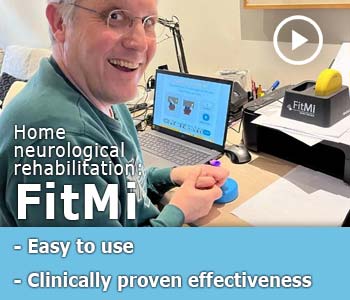
FitMi
An interactive rehabilitation system that motivates you to complete hundreds of repetitions daily – exactly what the brain needs to rewire. FitMi turns rehabilitation into an engaging, game-based experience that works for both patients and carers.
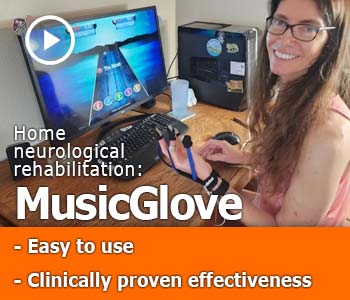
Learn about FitMiMusicGlove
A therapeutic glove that combines finger and grip exercises with music and interactive games. Particularly effective for improving hand and finger function – and far more engaging than traditional repetitive exercises.
Learn about MusicGloveWorth knowing
These devices work because they engage the exact mechanisms that drive neuroplasticity – repetition, progressive challenge, and motivation. For more information on modern neurological rehabilitation, visit TisaleRehab.com.
A Final Note: Your Recovery Story Is Still Being Written
Stroke recovery is not a race against the clock, and it is not a competition with anyone else. It is a process – one in which your brain learns, adapts, and finds new ways forward, step by step, day by day.
If you've believed any of these myths, you're in good company. Many people do. But understanding the truth changes how you approach recovery – and even small shifts in approach can lead to real, lasting improvements in how you function.
Remember
You are not "too late," "too old," or "too far along" to keep improving. Your recovery story didn't end with the stroke. It continues – every single day that you show up and try.
Sources
- TisaleRehab.com – Neurological Rehabilitation Resource
- FitMi – Evidence-based full body rehabilitation system
- MusicGlove – Hand rehabilitation based on neuroplasticity research
- American Heart Association / American Stroke Association – Stroke Rehabilitation Guidelines
- National Institute of Neurological Disorders and Stroke (NINDS) – Neuroplasticity and Recovery
- Journal of Neurology, Neurosurgery & Psychiatry – Research on post-stroke neuroplasticity
- PMC / NIH – Neuroplasticity after stroke: long-term recovery evidence